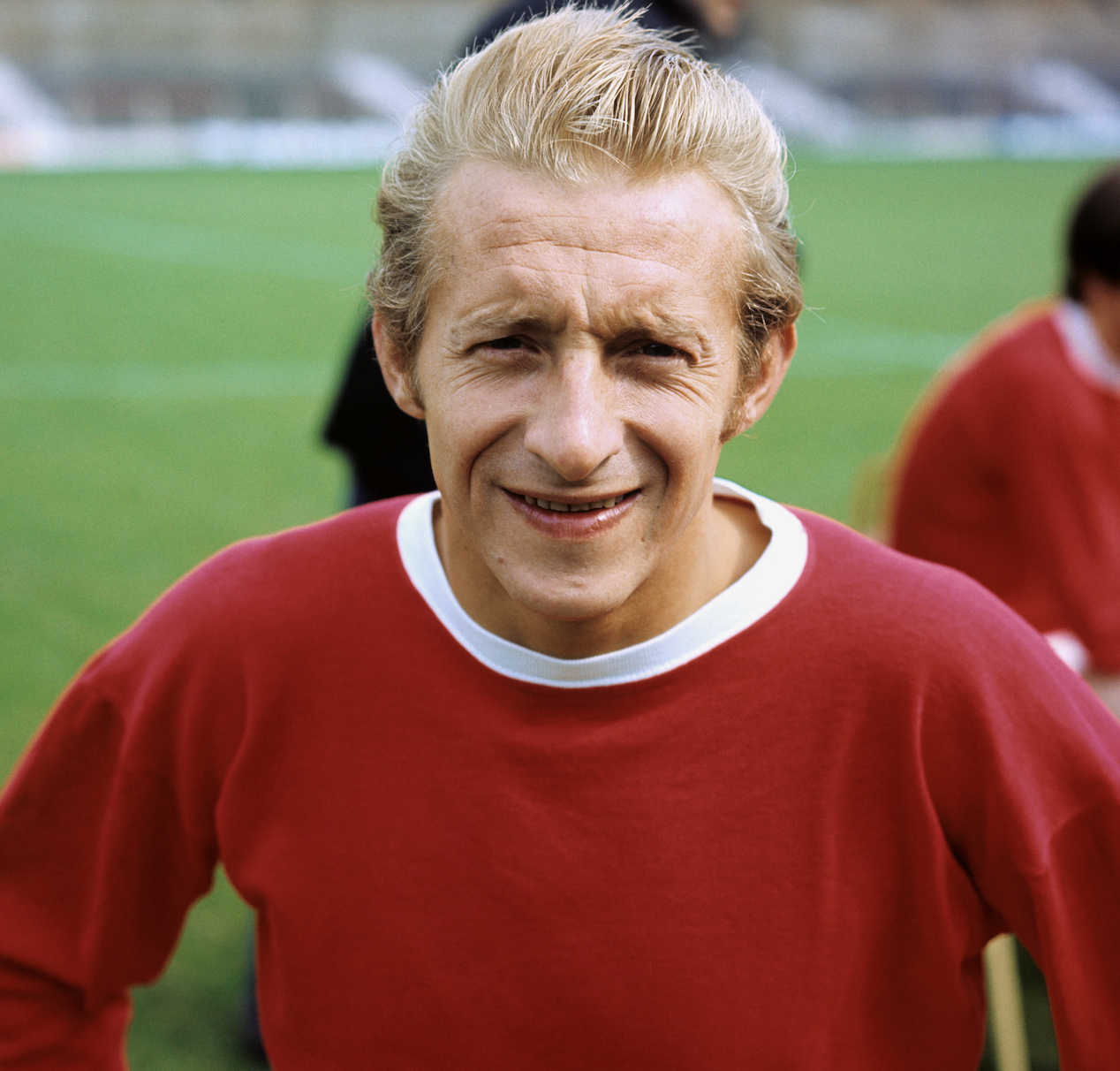
We at the FWA were saddened to learn this week that Denis Law had passed away at the age of 84. The former Scotland, Huddersfield, Manchester City, Torino and Manchester United striker was one of the greatest goalscorers of the game, winning the Ballon d’Or in 1964 after scoring 46 goals for United.
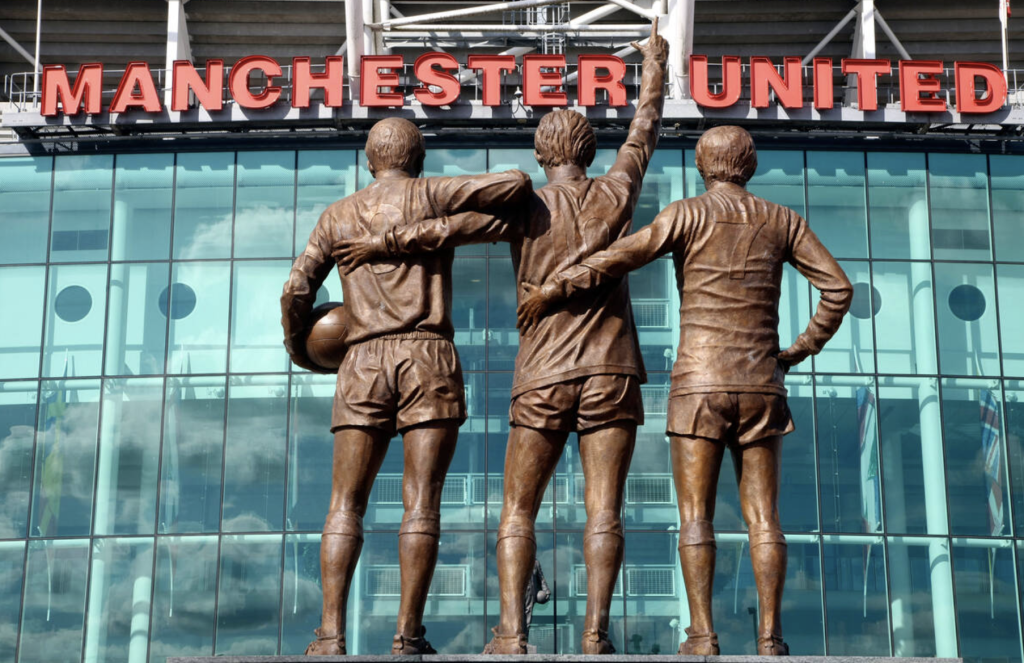
Along with Bobby Charlton and George Best, he was part of the ‘holy trinity’ of Manchester United’s great side of the 1960s, commemorated with a statue outside Old Trafford.
Jim White of the Telegraph, and the FWA national executive committee, grew up in Manchester as an adoring fan of the “Lawman” and has written this wonderful tribute to the great man.
One of the true privileges of being a football writer is you get to meet your heroes. So it was, the afternoon before Manchester United’s notorious European Cup tie in Istanbul in 1993, that I found myself on the halfway line of the Galatasaray pitch alongside Denis Law, who was standing there practising air shots at an imaginary keeper. I was working for the Independent, he was a superb co-commentator for BBC Radio, his rich Aberdonian burr adding extra authority to his vivid analysis. And he treated me with the kind of warmth and respect which suggested we were somehow on the same level. Which was ludicrous. He was, after all, Denis Law.
United had been greeted at the airport the previous evening by a hostile crowd flourishing a banner reading “welcome to hell”. So I asked the Lawman if he had ever been intimidated at a football match. I said it expecting a swift and dismissive response. Not least because he was one of the bravest footballers I had ever seen play the game, devilishly carefree in the manner in which, despite his slim, slight physique he was always at the heart of the scrap, occasionally getting his retaliation in first. The idea of fear seemed entirely alien to the man I had witnessed so often terrorise opponents. But no. There was no arrogant talk of wimps and scaredy cats.
“Oh aye,” he said. “I played here as a matter of fact for Scotland once.”
“And how was it for you?” I asked.
“Shat myself,” he replied, grinning wide.
That was not what I expected. But it was typical Denis: relentlessly self-deprecating. Which was odd, as growing up I always assumed he had very little to be modest about.
As an eight year old in Manchester in 1968, we had plenty of options when it came to footballing idols. On the blue side there was Summerbee, Lee and Bell. On the red Law, Best and Charlton. One lot were the champions of England, the other champions of Europe. But for so many of us, there was only one legitimate choice when it came to picking a favourite: The Lawman. The way he pulled his shirt out of his shorts, the way he gathered the cuffs around his fists, the way he pointed his right forefinger to the sky in celebration of a goal, that was how you did it. His was a fashion copied in every playground in Manchester.
“Tuck your shirt in, boy,” I cannot have been alone in being told by the PE teacher when turning out for the primary school team.
“The Lawman doesn’t, Sir,” was the determined reply.
“The Lawman has style,” was the response. “You boy are a scruff.”
And the Lawman had style all right. He was a wisp of a player, balletic and graceful, with a gymnast’s leap and sprinter’s dash, allied to an unflinching determination. Off the pitch, too, in his elegant mohair suits and mod-cut tuft of strawberry blond hair, he always looked the business. When I first started going to Old Trafford as a starstruck boy, I found I was not alone in my selection. For many of the lads who watched from the terraces, George Best was a little too showbiz, Bobby Charlton a tad too establishment. It was Law who was lauded, it was Law who was idolised, it was Law who was anointed the King of the Stretford End.
We United supporters were not the only ones who regarded him as something special. For so many fans of rival clubs, he was the player they most wished played for them. His contemporaries too, held him in the highest esteem. That afternoon in Turkey, Alex Ferguson, who had been leading his players through their eve of match training sessions, spotted Law in the centre circle and came over to speak to him. He put his arm round Law’s shoulders and announced to the couple of us reporters standing out there: “you’re looking at the two greatest Scottish forwards in history, with 55 caps between us. When I say that, he’s got 55 and I’ve got none.”
This was the most ferocious of football managers behaving like a teenaged fan around a man he regarded as an absolute genius of the game. Law just smiled bashfully as Ferguson gushed on about how he wished he could call on a young Law the following evening.
“Actually Denis, having said that, have you brought your boots with you now?” he roared with laughter.
Law was a man who must have spent most of his adult life encountering people who treated him not so much with deference but as a living God. Yet, when he retired and moved into media work, those who worked with him discovered there was nothing remotely pompous or self-important about him. Just as he was as a player, when he preferred to head home to his wife and five children rather than lead the Bestie-style high life that was surely available to him, he was almost bashful in company. Funny, wry, full of stories he may have been, but he never sought to occupy centre stage. He preferred to enjoy others’ opinions and stories. On the many occasions I met him thereafter, he was always great company. Unless, that is, you ever happened to ask him about the backheeled goal he scored for City in the 1974 derby. It was the last goal he ever scored in football, and one he greeted with the look of someone who had just run over the family pet. No wonder. Although it turned that out other results would have condemned them whatever the result, he thought that he had just been responsible for sending the club he had done so much for, before he was scandalously evicted from the premises by Tommy Docherty, down into the second division.
“Did I score that day?” he once told me, a grin spreading across his face. “I don’t remember.”
That was the Lawman: funny, kind, generous and an unfailing model of modesty. The King indeed.