

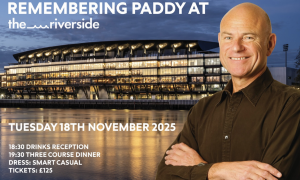
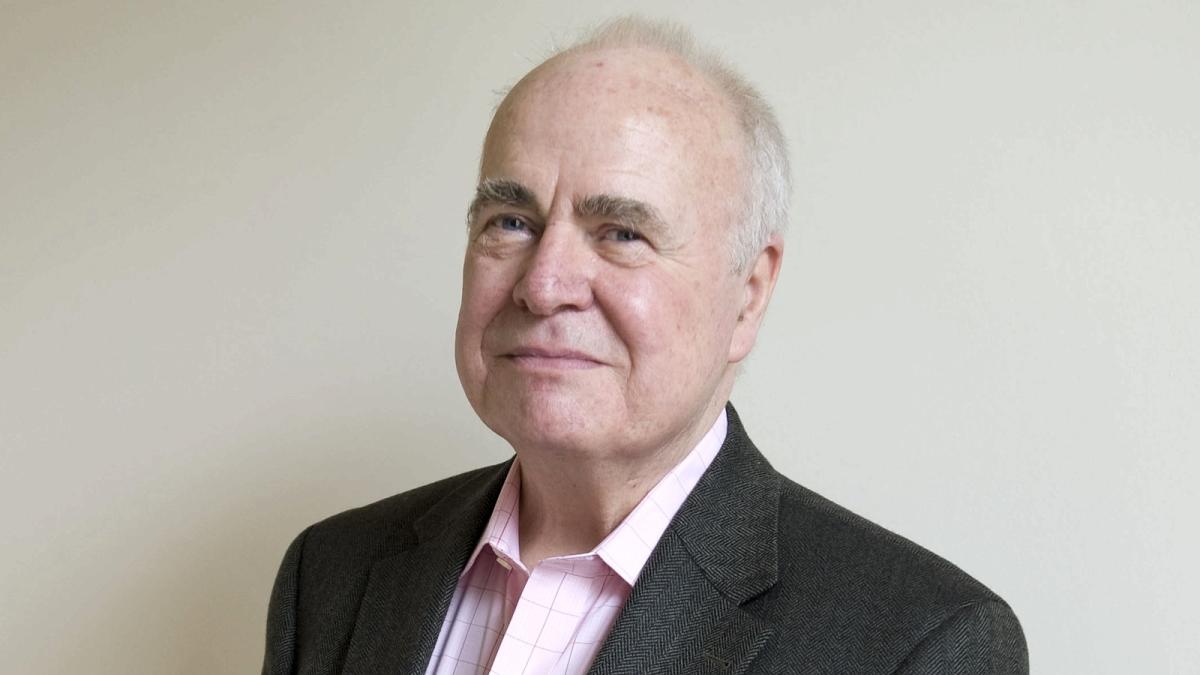
A week after his passing, Patrick Barclay is still being remembered and revered by friends, colleagues and the wider footballing world. Leo Moynihan, the football writer and author, got to know Paddy well through his late father John Moynihan, himself an esteemed football writer. Here is Leo’s tribute.
Almost a decade ago, I headed to Barnes with my friend, the brilliant filmmaker, Jonny Owen. Jonny had started to make a documentary about the intertwining lives of Matt Busby, Bill Shankly and Jock Stein, three managers who grew up among the mining communities of Lanarkshire and Ayrshire. To turn up on the banks of the Thames in leafy south-west London might have seemed a million miles from the soot and sweat world shared by these three Scottish giants, but only a few wonderful hours later it was clear that we had arrived in absolutely the perfect place.
We were greeted at the door by that Paddy smile. Whisked into his kitchen on a wave of charming conversation and laughter, immediately at ease as he made the tea. Wearing one of his pristine white v-neck t-shirts, tanned arms from a jaunt abroad and a pair of faded Levis jeans, he seemed like an age-defying film star enjoying some time off between movies.
The tea was made, and then as we began to record and talk about our subject, Paddy, that most congenial of men went to work and in front of our eyes and ears became Patrick Barclay. With each question or prompt, came answers of such knowing authority, delivered with such purring Dundonian class that Jonny was seen to silently punch the air in delight. If his film had gravitas due to its subjects, then in Patrick Barclay it had beautifully found its voice.
I knew that feeling. Years before, when I was starting out, I was asked to write a biography of another Scotsman, Gordon Strachan. I had accepted the gig, but had laid in bed at night wondering how on earth I was going to deliver one-hundred-thousand words. An invite to Paddy’s and over a bottle of wine with a number of anecdotes about his beloved Dundee (Strachan’s first club), the loan of a few books and a dip into his biblical contact book for some relevant voices and I too left his home beaming; now confident that my project might just be doable.
I was far from special or alone when it came to Paddy’s unerring support. Among the many wonderful tributes that have followed his sad death last week, what stands out is the number of writers who benefited from his genuine desire to help. Mentor might have sounded too grandiose for Paddy’s affable nature but like it or not, he was able to enthusiastically advise and support so many of us wanting to write about football for a living. That was Paddy. He had a natural ability to make you feel good, and a “Fancy a pint, pal?” text from him was very much the most uplifting thing that my buzzing phone could ever ask of me.
We met through my father, the football writer, John Moynihan. Paddy would join us at the Chelsea Arts Club, a place that matched his own love of a long conversation over a longer lunch. The three of us would sit in the usual corner spot at the bar. Dad sipping on something pink and fizzy, Paddy and myself enjoying a pint (“the first one won’t touch the sides”). I never took these moments for granted. To sit with these men, to listen; I had won some sort of social lottery. Perpetual smiles and laughter causing my cheeks to ache, as they shared stories from the world’s press-boxes.
A favourite was one night in Seville. Scotland had been dismantled by Brazil in a group game at the 1982 World Cup, but rather than licking their wounds, Paddy, along with other doyens of the Scottish press corps were joined by dad in a restaurant called the Rio Grande on the banks of the Canal de Alfonso XIII. There they sat, dissecting the brilliance of what they had just witnessed, laughing about how David Narey’s opening goal had merely shaken the wasps nest, and how Scottish fans – in a show of drunken unity with their Brazilian counterparts – had swapped their tartan kilts for green and yellow sarongs.
The writers sat through the night, drinking and talking, smiles etched across their faces. It was a night when football was the perfect backdrop to a perfect setting. Then, for the rest of dad’s life, wherever he may be holidaying, a postcard would arrive on Paddy’s floor. There may be an image of a vineyard in Provence or the Golden Gate Bridge in San Francisco, but always it came with the same inscription: “It’s nice, but it’s not the Rio Grande”. Paddy loved that.
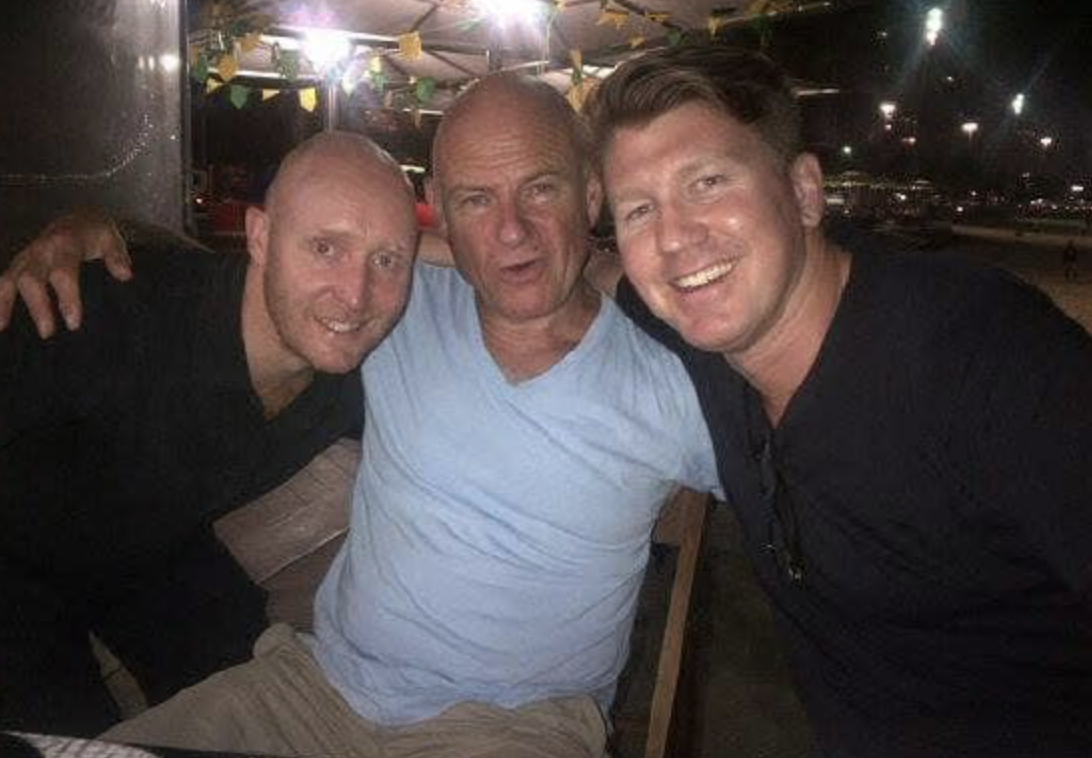
When dad died in 2012, Paddy would say that in me, he had inherited a son. It was a joke that meant everything to me and we continued to meet. A Barnes local, a wonderful few weeks along the Copacabana during the 2014 World Cup (nice but not the Rio Grande), but mainly at the Arts Club. We’d greet each other with a hug and Paddy would order three or four different kinds of sandwiches. “Then we can share”. It summed him up.
Conversation would usually start, of course, on the big football topic of the day. We wouldn’t always agree. As a weathered old centre-half I took some umbrage with his desire to combat and outlaw what he saw as football’s more retro tackles. I argued that the game we loved was about contact. He argued back that the likes of Lionel Messi and his beloved Andrés Iniesta must be protected. That was Paddy. He loved football’s aesthetic possibilities.
That came, I think, from his Scottish upbringing. His glare would harden as he described how it was Scots and their diminutive pioneers who made football the intricate game he adored. “It’s coming home?” he’d joke. “Only if Scotland win the bloody thing.” When pressed by myself and Jonny Owen that day on why Scots had so shaped football in its formative years, he quipped, “Maybe it’s because we were smaller and our lower centre of gravity meant our brains were closer to the ball.” Gold dust.
With that love and fervent desire for the game to be played in the right way, Paddy might have been an asset to football’s governing bodies. His four great books were all about managers. These biographies on José Mourinho, Sir Alex Ferguson, Herbert Chapman and Sir Matt Busby will be gleefully revisited by us all, but it is interesting that when pressed on which manager was best, Paddy (despite his absolute love for Sir Matt) would argue Chapman’s case. That fascination and admiration for the positive innovation that Chapman brought, obviously the deciding factor.
Paddy sporting a FIFA or UEFA badge on his breast pocket is an intriguing image and I’m sure both would have benefited from his eyeful charm, but for those of us who devoured his detailed match reports, learnt from his insightful interviews or shifted in our seats reading his ballsy columns, we can only be grateful that it was with a press pass that he travelled the footballing world.
Paddy was never flash about his writing, doubts could creep in about a sentence or two but he knew too much about his trade not to have a healthy amount of confidence in his worth. I loved to read him, that won’t stop. One example takes us again to Spain in 1982. That Brazil with which he and anyone with eyes had fallen had been beaten in arguably the greatest World Cup match of any time by the far less artisan Italians. It was over and we all mourned. Paddy’s opening line to his match report was perfect. “Brazil, hitherto World Cup favourites in more senses than one, are out of the tournament.” Like a caring parent calming a wounded child, Paddy had, without fuss, pulled off the plaster, and with that we could get on with our day.
Newspaper columns have been duller since his retirement and now the world is too. Since he died, I’ve been back to the Arts Club. That corner at the bar looks even more empty, that laugh of his can’t be heard, and that feeling that the next few hours in his company will be sprinkled with magic is forever gone. I’ve looked to my phone, longing it to ping back into life. “Fancy a pint pal?” The answer will always be yes.







Mark Sheridan
February 24, 2025 at 11:25 am
A very heartfelt tribute to a man most humble and knowledgeable…